Queer Places:
Groton School Chapel, 282 Farmers Row, Groton, MA 01450, United States
Harvard University (Ivy League), 2 Kirkland St, Cambridge, MA 02138
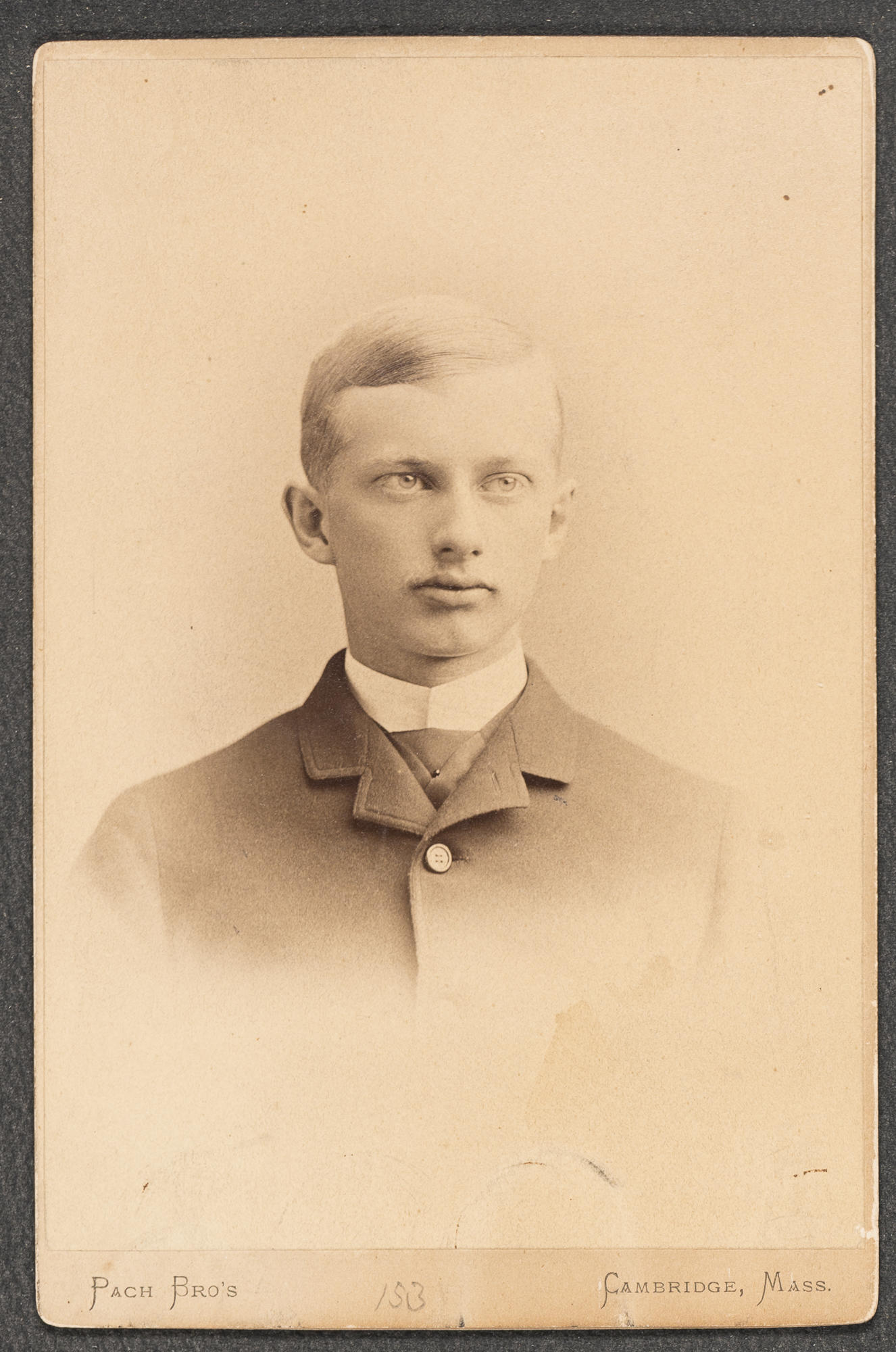 William Amory Gardner (December 3, 1863 - February 8, 1930), born in Boston on December 3, 1863, to Joseph Peabody Gardner and Harriet Sears Amory Gardner,
grew up as part of a prominent Boston Brahmin family alongside his brothers,
Joseph Peabody Gardner, Jr. and Augustus Peabody Gardner. His life took a sharp turn in 1875 when his
father committed suicide while the family was traveling in Istanbul, leaving behind three young orphan sons. John Lowell "Jack" Gardner and his wife,
Isabella Stewart Gardner, stepped in after losing their own son in 1863, adopting and raising William
and his brothers as their own. Isabella's deep love of art, culture, literature, and travel heavily influenced William, especially during European trips
such as their summer 1879 travels to London and France.
William Amory Gardner (December 3, 1863 - February 8, 1930), born in Boston on December 3, 1863, to Joseph Peabody Gardner and Harriet Sears Amory Gardner,
grew up as part of a prominent Boston Brahmin family alongside his brothers,
Joseph Peabody Gardner, Jr. and Augustus Peabody Gardner. His life took a sharp turn in 1875 when his
father committed suicide while the family was traveling in Istanbul, leaving behind three young orphan sons. John Lowell "Jack" Gardner and his wife,
Isabella Stewart Gardner, stepped in after losing their own son in 1863, adopting and raising William
and his brothers as their own. Isabella's deep love of art, culture, literature, and travel heavily influenced William, especially during European trips
such as their summer 1879 travels to London and France.
William prepared for college at Hopkinson's School and went on to graduate from Harvard University with the class of 1884, where he distinguished
himself as a brilliant classicist and a member of the Alpha Delta Phi and Delta Kappa Epsilon fraternities. Sharing his aunt's passion for exploration, he
traveled extensively and grew deeply attached to Greece, once writing home that he had "been flying about + am becoming quite Greek." During his travels,
he famously attempted to smuggle two ancient figurines out of Greece, only to discover later that they were fakes; in 1903, upon the opening of the
Isabella Stewart Gardner Museum, he gifted these replica pieces to his aunt, who placed them in the Raphael Room. His academic dedication culminated in his
appointment to the Board of Trustees for the American School of Classical Studies at Athens in 1910, where he served for the rest of his life, and the 1908
publication of his book, In Greece With the Classics. His connection to the school was further commemorated by a portrait painted by Anders Zorn in
1899—commissioned by William to please his aunt, though William later admitted neither he nor his family liked it. After his death, the portrait made its
way to Athens, where it remains.
Almost immediately following his graduation from Harvard, William identified himself with the newly founded Groton School, joining its faculty as a
master in the Greek department and later teaching mathematics. Although he remained on the staff and served as a member of the Board of Trustees, he did
little actual teaching in his final years. He shaped the campus profoundly, funding the creation of Groton's magnificent school chapels—including
St. John's Chapel, built in moving memory of his brother Joseph, who had tragically committed suicide in 1886 after a failed romance. Alongside his
academic contributions, William lived an eccentric and exotic lifestyle by Brahmin standards. He built a large estate on the school grounds and funded the
construction of an eclectic complex he named the "Pleasure Dome," designed by architect R. B. Potter to house a concert hall, an indoor swimming pool,
squash courts, and a small theater. He also donated an extensive collection of rare books to the institution, housed in the school's Gardner Library.
Outside of Groton, William maintained a high-profile social and professional footprint. He was a keen sportsman, sailor, and rider who owned a striking
summer home at Pride's Crossing—a large stone, castle-like mansion overlooking Mingo Beach. His club memberships included the Somerset Tennis and Racquet
Club, the Knickerbocker Club of New York, and both the Eastern and New York Yacht Clubs, alongside serving as a trustee of the Groton Public Library.
Personally, he moved within elite circles that intersected deeply with prominent LGBTQ history, maintaining a close friendship and rumored romantic
relationship with Ned Warren, the benefactor of the Museum of Fine Arts, and embodying an uninhibited,
bohemian aesthetic that frequently scandalized and amused contemporaries alike.
William Amory Gardner passed away on February 8, 1930, at Groton, Massachusetts, of heart disease following a brief ten-day illness. Funeral services
were held the following morning at the Groton School Chapel. He was survived by his niece, Mrs. William Gordon Means (Constance Gardner) of Philadelphia
and the North Shore, who was the daughter of his late brother Augustus. William's legacy endures through his architectural contributions to Groton, his
scholarship in classical studies, and his enduring impact on American education and the arts.
References:
Other references:
- Isabella Stewart Gardner Museum Archives & Collections: Jackson, Dakota. "In Greece with William Amory Gardner." Inside the Collection Blog, Isabella Stewart Gardner Museum, September 1, 2020.
- Personal correspondence between William Amory Gardner and Isabella Stewart Gardner (including letters from Athens and Corinth, 1886).
- Archival object records, photographs, and portrait documentation, including William Morris Hunt’s 1873 charcoal sketch of William Amory Gardner and Anders Zorn's 1899 portrait.
- Gardner, Frank Augustine (compiler). Gardner Memorial: A Biographical and Genealogical Record of the Descendants of Thomas Gardner, planter, Cape Ann, 1624, Salem (NaumKeag), 1626–1674, through his son Lieut. George Gardner.
- Endicott, William Crowninshield. Captain Joseph Peabody East India Merchant of Salem (1757–1844): A Record of His Ships and of His Family.
- "Isabella Stewart Gardner, Early Gay Icon".
Support this project
This website is a passion project researched, developed, and funded entirely by me. If you find the content valuable and would like to help support the ongoing research and hosting costs, any contribution is deeply appreciated.
Thank you for keeping this independent resource alive!
My books on Amazon: Elisa Rolle's books
BACK TO HOME PAGE